Can I Clean Mould Myself?
Last updated
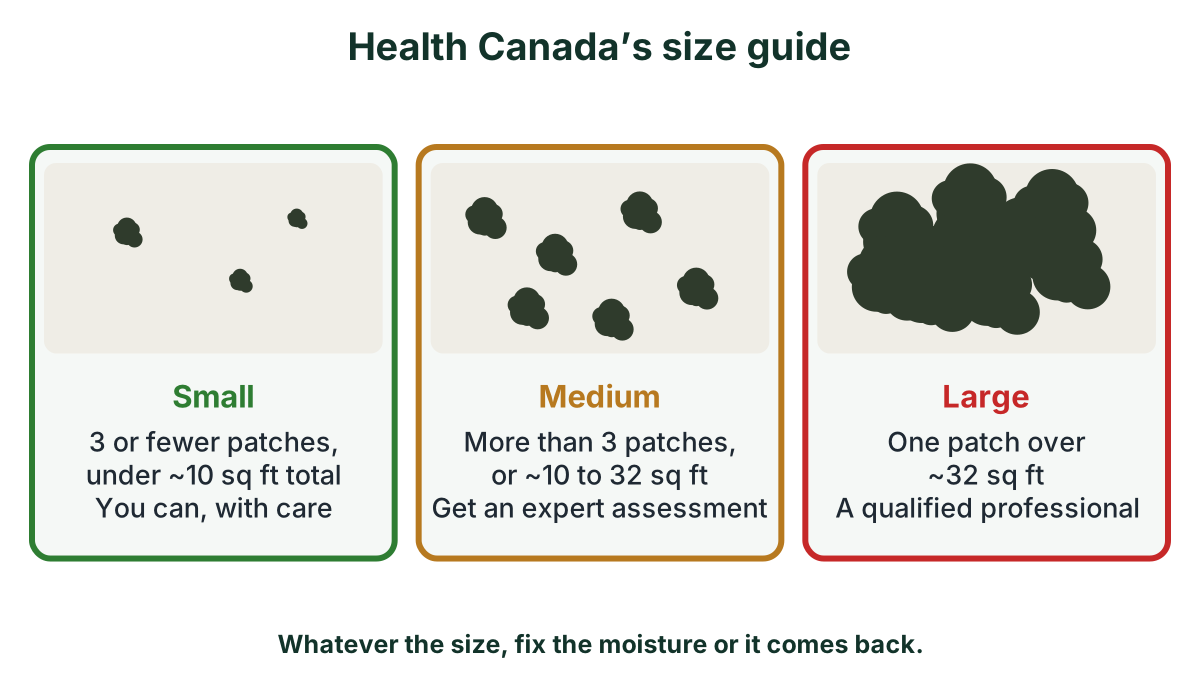
Often, yes. Health Canada says small areas, three or fewer patches less than about 10 square feet (1 m²) in total, you can clean yourself with the right precautions. A single patch larger than about 32 square feet (3 m²) should be assessed and cleaned by a qualified professional. And whatever the size, if you don’t fix the moisture, it comes back.
Health Canada’s size guide
| Size | What it means | Who should clean it |
|---|---|---|
| Small | Three or fewer patches, less than about 10 sq ft (1 m²) in total | You can, with precautions |
| Medium | More than three patches, or patches between about 10 and 32 sq ft (1 to 3 m²) | Expert assessment recommended |
| Large | A single patch larger than about 32 sq ft (3 m²) | A qualified professional |
Alberta Health Services uses similar sizes, and recommends professionals for medium areas in rental homes.
Size isn’t the only test. Call a professional even for smaller areas if:
- the mould is in or behind drywall, carpet or insulation, not just on the surface,
- there’s a musty smell but you can’t find the source,
- it keeps coming back after cleaning,
- it’s in a rental you don’t own (your landlord is responsible), or
- someone in the home has asthma or breathing problems. Mould can cause asthma flare-ups, stuffy nose and eye irritation.
How to clean small surface mould safely
- Protect yourself. Gloves, eye protection, and a properly fitted N95 mask.
- Keep it contained. Close the door and open a window if you can.
- Clean, don’t just spray. Scrub hard surfaces like tile, glass, sealed wood and painted walls with soap and water.
- Dry the area well. Use a fan or towel.
- Throw out what can’t be cleaned. Mouldy cardboard, fabric or ceiling tiles go in a sealed bag.
- Fix the moisture. Run the bathroom fan longer, wipe window condensation, fix the drip.
What not to do
- Don’t rely on bleach. Alberta Health Services says biocide-only treatment like bleach is not acceptable remediation. On porous materials, the mould is in the material, not just on it. See why bleach doesn’t fix mould.
- Don’t dry-brush or sand mould. That puts spores in the air.
- Don’t paint over it. It grows back under the paint.
- Don’t disturb old materials like drywall compound, flooring or insulation in older homes. They may contain asbestos, which only licensed professionals can remove in Alberta.
Where mould comes from
Mould grows indoors where there are leaks, high humidity or condensation. Finding and fixing that source is the real cure. In Edmonton winters, condensation on cold windows and walls is a big one. See bathroom and window mould.
When to call us
If it’s more than about 10 square feet in total, hidden, recurring, or in a home with someone who has breathing problems, book an inspection.